In an off-hand comment made during a YouTube video with Jay Leno, Tesla Inc (NASDAQ:TSLA) seemingly confirmed the development of a wireless inductive home charger for its electric vehicles (EV).
This shift marked a significant move away from traditional charging methods. Historically, Tesla had not shown a keen interest in wireless charging technology, focusing instead on conventional plug-in solutions.
The introduction of a wireless charging solution, shared by Electrek, addresses a niche but relevant concern in the EV world. While plugging in an EV is not an overly burdensome task, Tesla’s move towards wireless charging aligns with its vision of autonomous driving technology. In a future where cars drive themselves, the ability for these vehicles to autonomously charge without human intervention becomes increasingly valuable.
Tesla’s recent activities had also fueled speculation about its commitment to wireless charging. Earlier in the year, the company released an image of a wireless home charging station during a presentation. This image, along with the company’s brief acquisition and subsequent integration of staff from a startup specializing in wireless charging, hinted at Tesla’s interest in the technology.
It was Tesla Chief Designer Franz von Holzhausen in the Leno Cybertruck video who stated, “We are working on inductive charging. You don’t even need to plug anything in at that point. You just drive over the pad in your garage and you start charging.” Confirmed details about the product remain sparse.
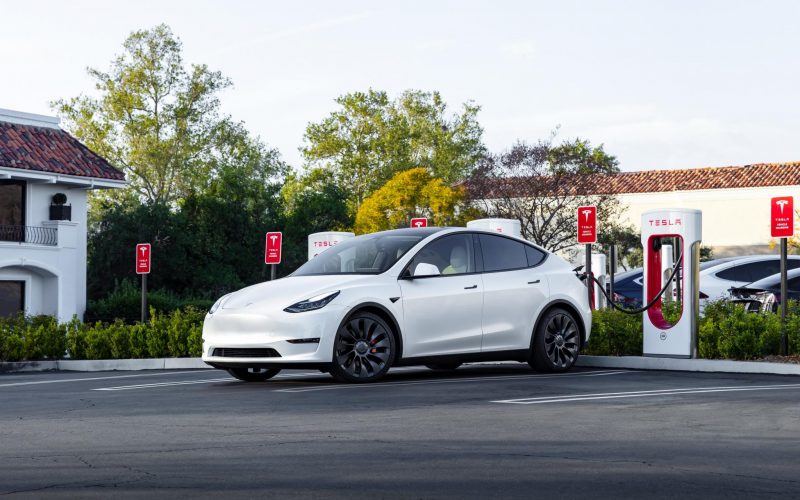
Photo: Tesla Model Y, Courtesy of Tesla