
Dogecoin‘s (CRYPTO: DOGE) network activity hit an all-time high earlier this week, with a tenfold surge in daily transactions.
The cryptocurrency, considered the first “meme coin,” briefly surpassed both Bitcoin (CRYPTO: BTC) and Litecoin (CRYPTO: LTC).
On Sunday, over 645,000 transactions were registered on the network — a significant increase from Dogecoin’s usual average of about 20,000 daily transactions.
See Also: Crypto Holders Show Resilience As Wallets With At Least One Bitcoin Surpasses 1M
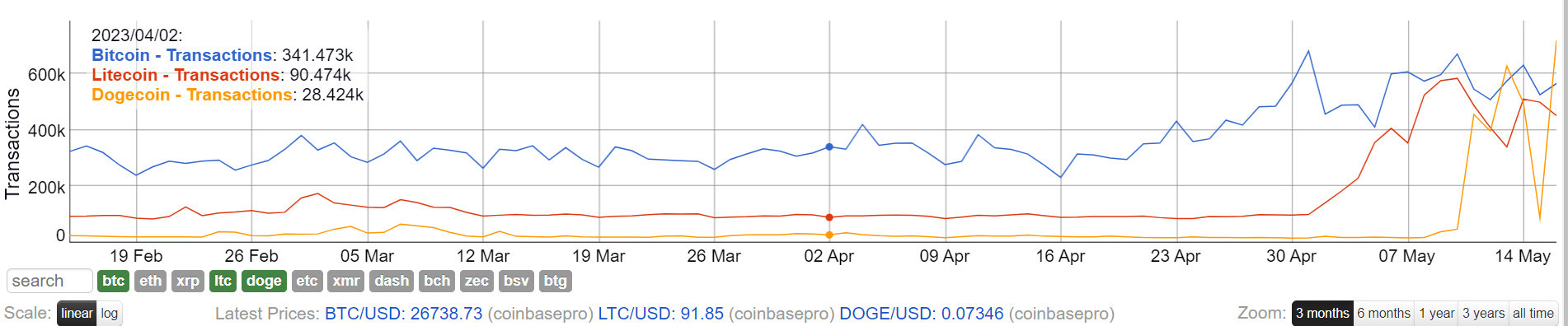
The uptick in activity came after the introduction of the DRC-20 token standard on May 9. The DRC-20 token standard paves the way for developers to create tokens that use Dogecoin for network fees.
Supporters say this bolsters Dogecoin utilization and opens the door to potential decentralized finance (DeFi) services that could be built using blockchain technology.
Critics argue that the introduction of DRC-20 could lead to network congestion, diverging from Dogecoin’s original goal of becoming an everyday currency. High fees and network congestion are significant issues for any blockchain, they say.
These factors could potentially make the network more expensive and slower for regular users, thus potentially hindering cryptocurrency adoption.
Next: SEC To Target Coinbase In Regulatory Action