Cryptocurrency Ethereum Classic Up More Than 9% In 24 hours

Ethereum Classic's (CRYPTO: ETC) price has increased 9.46% over the past 24 hours to $23.48. Over the past week, ETC has experienced an uptick of over 7.0%, moving from $22.02 to its current price. As it stands right now, the coin's all-time high is $167.09.

Ethereum Classic’s (CRYPTO: ETC) price has increased 9.46% over the past 24 hours to $23.48. Over the past week, ETC has experienced an uptick of over 7.0%, moving from $22.02 to its current price. As it stands right now, the coin’s all-time high is $167.09.

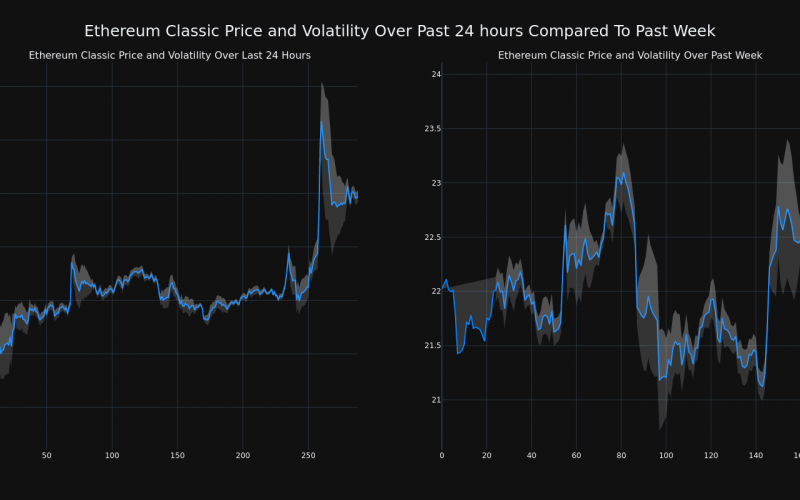
The chart below compares the price movement and volatility for Ethereum Classic over the past 24 hours (left) to its price movement over the past week (right). The gray bands are Bollinger Bands, measuring the volatility for both the daily and weekly price movements. The wider the bands are, or the larger the gray area is at any given moment, the larger the volatility.

price_chart

The trading volume for the coin has increased 60.0% over the past week while the overall circulating supply of the coin has increased 0.16% to over 139.23 million which makes up an estimated 66.08% of its max supply, which is 210.70 million. The current market cap ranking for ETC is #25 at $3.27 billion.

supply_and_vol

Powered by CoinGecko API

This article was generated by Benzinga’s automated content engine and reviewed by an editor.

Total
0
Shares
Related Posts
Read More

Why Amazon Shares Are Diving

Amazon.com, Inc. (NASDAQ: AMZN) shares are trading lower by 3.25% to $114.17 during Thursday's trading session amid overall market weakness. Shares of several companies in the broader tech and consumer discretionary sectors are trading lower amid a rise in treasury yields.

AMZN

Read More

Home Run To Homewrecker – Analyst Cautious On Homebuilders, Downgrades Key Players

Seaport analyst Kenneth Zener adjusts his stance on homebuilding stocks, downgrading key players due to a cautious outlook for FY24. With recession concerns lingering, Zener anticipates potential challenges, emphasizing the risk of anticipated tailwinds transforming into headwinds. Builder margins are expected to stabilize, influenced by diminishing past incentives, counteracted by rising input costs.

DHI