ASML Holding NV (NASDAQ:ASML) and Taiwan Semiconductor Manufacturing Co (NYSE:TSM) can remotely turn off their sophisticated chipmaking machines if China invades Taiwan, Bloomberg reports.
U.S. government officials have discussed with Dutch and Taiwanese authorities the potential consequences if China’s aggression towards Taiwan escalates into an attack. These discussions have raised concerns given Taiwan’s critical role in global semiconductor production,
Also Read: Pay More for Chips Made Outside Taiwan as AI Demand Soars and Global Expansion Continues: Taiwan Semiconductor
During a meeting with the Dutch government, ASML confirmed its ability to deactivate these machines remotely despite the threat. The Netherlands has conducted invasion simulations to better evaluate the risks.
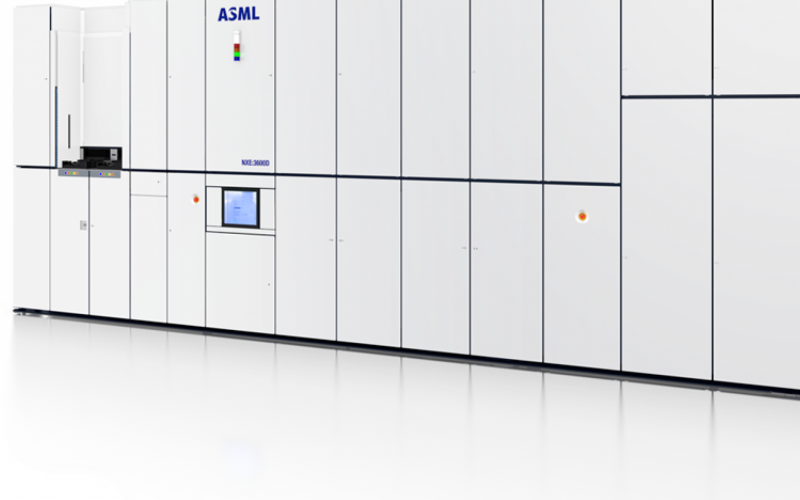
This remote shutdown capability is specific to ASML’s line of extreme ultraviolet (EUV) machines. It is crucial for producing the smallest and most advanced microchip transistors, with TSMC being the primary client.
These EUVs, essential for AI and sensitive military technologies, are the only ones of their kind and are produced exclusively by ASML in Veldhoven.
ASML’s EUV machines, each costing over 200 million euros, are tightly regulated. Influenced by U.S. pressures, the Dutch government restricts ASML from selling these machines to China due to the potential advantages it could give in the global semiconductor competition.
U.S. influence has also led to the Dutch government’s recent actions to stop exports of ASML’s highly sophisticated chipmaking machines to China.
Before this, U.S. officials had already influenced ASML to cancel certain deliveries to Chinese firms.
ASML anticipates that the latest export-control measures will impact up to 15% of its sales to China this year.
Prior reports indicated Huawei Technologies Co’s self-aligned quadruple patterning (SAQP) patent bypassed the need for ASML’s EUV machines, which are restricted by U.S. embargo.
In November, Huawei outbid Nvidia Corp (NASDAQ:NVDA) for a significant artificial intelligence chip order from Baidu Inc (NASDAQ:BIDU) as U.S. sanctions took effect.
Simultaneously, Alibaba Group Holding Limited (NYSE:BABA) and other Chinese companies reportedly planned substantial cuts in their Nvidia chip orders. Chinese cloud companies expect to reduce their orders for high-end AI chips from Nvidia.
Despite a 5.5% decrease in overall imports in 2023, China’s imports of chipmaking machines surged by 14% to nearly $40 billion, the highest since 2015. This spike included a notable increase in imports from the Netherlands, driven by anticipation of stricter export controls.
Price Actions: ASML shares traded lower by 1.21% at $928.04 premarket at the last check on Tuesday.
Disclaimer: This content was partially produced with the help of AI tools and was reviewed and published by Benzinga editors.
Photo via ASML