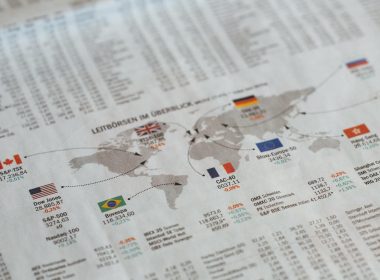
On Thursday, December 14th, U.S. stock markets ended positively as Treasury yields reached their lowest in months, driven by a shift in investor focus away from growth stocks due to the Fed's dovish position.
On Wednesday, December 13th, U.S. stock markets closed higher, with major three indices soaring more than 1%, as the Federal Reserve hinted at ending rate hikes and lower borrowing costs in 2024.
On Tuesday, December 12th, U.S. stock markets closed on a high post-inflation data, ahead of the Fed's policy decision.
In economic data, November's consumer price index increased by 0.1%, while the annual increase stood at 3.1%, slightly down from October's 3.2% rate.
China's semiconductor industry is not only surviving, but thriving, despite trade restrictions. Huawei's Mate 60 Pro, with a domestically fabricated chip, signals a shift in the global tech race between the world's two largest economies.
Joe Biden warned Israel on Tuesday, expressing concern over IDF's current operations, while Global response & diplomatic efforts are underway to end the 67-day conflict.
On Monday, December 11th, U.S. stock markets closed on a high in anticipation of pivotal inflation data and the upcoming Federal Reserve meeting.
The S&P 500 saw broad gains, led by consumer staples and industrials, although communication services stocks fell, bucking the general uptrend.
This anticipated change is expected to ease the burden on households and businesses struggling with high-interest costs, particularly in the U.S. and Canada.
"Temu may not be able to offer its current low prices indefinitely, which could result in the erosion of its key value proposition," wrote Morgan Stanley analysts.
On Friday, December 8th, U.S. stock markets ended on a high, with the S&P 500 and Nasdaq hitting their top closing levels since early 2022, fueled by an encouraging U.S. jobs report, sparking optimism among investors about the economic outlook.