Tesla Inc (NASDAQ:TSLA) reportedly neglected critical limitations in its autopilot system following a deadly crash in 2016, potentially setting the stage for another incident.
What Happened: In a lawsuit related to a 2019 crash, Tesla engineers revealed that the company failed to rectify deficiencies in its autopilot functionality even after a similar crash in 2016, as reported by Bloomberg.
Engineers testified that the system was not adjusted to account for crossing traffic after the 2016 crash, in which a Tesla Model S driver, Joshua Brown, collided with a truck in Florida, resulting in his death.
The lawsuit, initiated by the family of Jeremy Banner, who lost his life in a 2019 Model 3 crash, is scheduled for a jury trial in Palm Beach County, Florida, in October. Banner’s widow is additionally seeking punitive damages, according to Bloomberg.
See Also: Everything You Need to Know About Tesla Stock
Why It Matters: Tesla’s autopilot system has faced scrutiny and criticism for its role in multiple accidents.
The incident involving Brown reportedly involved a speeding Tesla vehicle, with the driver allegedly engaged in watching a movie at the time. Tesla had contended that autopilot did not activate automatic braking due to specific conditions preventing the truck from being detected.
The 2016 crash was not an isolated event. A 2018 fatal crash involving Walter Huang, an Apple engineer, also raised concerns about autopilot malfunctions. Huang had reportedly complained about autopilot issues to his family before the accident.
Regulatory Actions: With at least 17 reported deaths allegedly involving Tesla’s autopilot since 2019, the National Highway Traffic Safety Administration has initiated investigations into several of these accidents.
However, Tesla’s own data claims a positive impact as the company has asserted that vehicles using Autopilot technology experienced only 0.18 accidents per million miles in 2022, compared to the U.S. national average of 1.53 accidents per million miles.
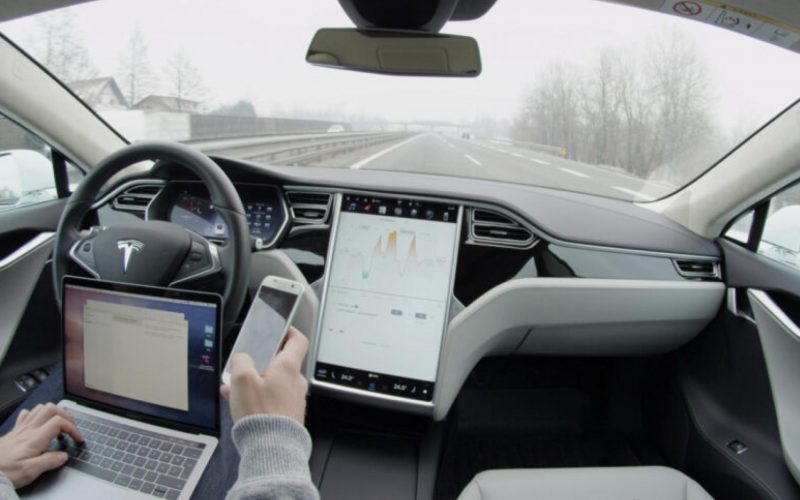
While Autopilot features offer automated steering, acceleration, and braking within a lane, Tesla emphasizes the need for driver supervision while the technology is engaged.
CEO Elon Musk has said he will live stream the test drive of version 12 of Tesla FSD on his social media platform X, formerly Twitter, next week. Musk has previously said that version 12 would no longer be beta, hinting that it would achieve full autonomy.
Price Action: Tesla shares closed down 3.2% on Wednesday at $225.60 and rose 0.82% in Thursday’s premarket, according to data from Benzinga Pro.
Check out more of Benzinga’s Future Of Mobility coverage by following this link.
Read Next: GM Cruise Self-Driving Vehicle Finds Itself In A Sticky Situation — Gets Transfixed In Concrete
Photo by Flystock on Shutterstock